

The availablility and lack of licensing restrictions of source code for the Linux kernel, has allowed Linux to be ported to a plethora of processors. There are the most popular for desktop, laptop and servers:
- Intel - Pentium (desktop)/Xeon (server) x86, x86-64, Itanium, Alpha
- IBM PPC (Power PC)
- YoLinux: List of Hardware Ports
Manufacturers:
RAM heat sinks:
Terminology:
- SRAM: Static RAM (SIMMS connector)
- DRAM: Dynamic RAM. Typically 70 ns. Can only read or write but not both at the same time. (DIMMS connector)
- EDO DRAM: Extended Data Output DRAM
- SDRAM: Synchronous Dynamic RAM. (PC100 compatable) Typically 10ns. DIMM module has 168 pins.
- RDRAM: Rambus DRAM. Requires motherboard chipset support. (RIMMS connector)
- DDR/DDRAM: Double Data Rate/Double Data RAM. Operates twice as fast as conventional memory by performing two memory operations for every CPU clock cycle. (PC133 SDRAM compatable) DDR DIMM module has 184 pins.
- DDR266: Double Data Rate at 266 Mhz. Throughput=8bytes x 266 Mhz/sec = 2.1 GB/sec. Hence the term: PC2100
My choices for best video graphics are:
- NVidia: - Best 3-D support,
Nvidia
chip-set based graphics cards
Quadro (high end CAD), GeForce (PC) and Quadro nView (dual monitor support Quadro)NVidia based graphics cards are by far the best for Linux because of 3D performance, 3D GL and GLX (SGI X-window/GL interface) support, and X-window DRI support. NVidia is the best for 2D video playback of video files and DVD's because of the Xv (Xvideo), and Xrender support. (fast screen access) In order to enable this support one must download the NVidia binary "Accelerated Linux Driver Set" from the NVidia web site and the modified Linux Kernel RPM. (See the YoLinux kernel RPM install Tutorial) Source for the modified kernel is also available from their site. This is NOT included in the Red Hat distribution. Note that this applies to XFree86 4.0+ which supports these X-window extensions. (Red Hat 7.0+)
Also see:- NVidia list of available Linux drivers
- NVIDIA Accelerated Linux Driver Set installation instructions.
- LDP: NVidia HowTo
- YoLinux.com: Dual monitor NVidia configuration
List of popular graphics boards manufacturers which use the NVidia chipset:
- ABIT
- Albatron Technology, Co. Ltd
- AOpen
- ASUS Computer International
- Biostar
- Chaintech Computer Co. Ltd.
- eVGA.com Corporation - Dual DVI monitor GeForce 7800 GT
- Gainward Co., Ltd.
- Gigabyte Technology, Co., Ltd.
- Jaton Corporation
- Leadtek Research, Inc.
- MSI Computer
- Palit Microsystems, Inc.
- PNY Technologies
- Prolink Computer Inc
- Pine/XFX
- ATI 3-D card: ATI Radeon.
Graphics board manufacturers using ATI chipsets:- Connect 3D
- Diamond
- Visiontek XTASY
- Matrox: Dual Headed Matrox G400 dual headed system
- Honourable mention: SGI digital flat panel display and digital video card.
- 3Dlabs: Oxygen - High end CAD 3D
For the ultimate list of supported video cards and the latest information see the XFree86 Project Home Page
Video Capture and TV cards:
- Hauppague analog WinTV bt 878 (Brooktree chip-set) - Hauppauge Linux support page

I purchased the Hauppauge model 447 which includes a PCI WinTV television and FM radio tuner card, video camera, FM antenna, an internal sound card connector and an infrared remote. The TV tuner card is cable-ready, supports 125 channels and closed captioning. The card is capable of supporting a resolution of 1,600 x 1,200 pixels, and has S-Video input, audio in/out (1/8" = 3.5mm, 3 conductor minijack), coax connectors for cable TV and FM radio cable/antenna inputs well as a remote control (IR) reciever socket (2.5mm minijack). An external IR reciever is also included. (Newr versions include headphones with mic and volume control.)
This capture card works with qVIX Video conferencing for Linux
The prefered Hauppauge video camera has an S-video or RCA video connection such as the:
- Hauppauge XC77B/44x (supplied with the Hauppauge WinTV 447)
- Hauppauge 338
- X10 Wireless video cameras - 2.4 Ghz
- Pixera - The PXG-100 (N-NTSC or P-PAL) ship with newer models of the 447.
- Swann - small
The default Red Hat 7.1 kernel comes ready to support TV/Video. If compiling the kernel, note that it requires the following modules: I2C Core, I2C Devices, I2C Algorithms, Video4Linux (v4l) API driver, Bttv drivers (this includes everything required for TV, radio and teletext) and Bttv mixer device (from the sound section).
Also see:
- YoLinux TV Video tutorial
- ATI All in Wonder AGP and PCI. For TV and video software for the ATI see: http://www.linuxvideo.org/gatos/. (TV tuner support built into graphics card.)
HDTV cards:
- DigitalVideoSystems.com - HDTV real time I/O card for Linux. (Expensive, $40k+)
- AJA Video - HDTV video products
Also see:
- YoLinux Video/Multimedia page
- Linux drivers for BTTV (Bt848/849/878/879) based frame grabbers
- BtTV - Installation notes
- GCBTTV - GUI that helps you to find the correct module options for your TV card.
- Linux Media Arts: LightSaver disk recorder - Linux based HD video record and playback
- Kernel documentation:
- Multiple displays - Tom Watson gone wild
- Multihead Framebuffer mini-Howto - draft
LCD Monitors:
- Acer
- AG
- AOC
- Batesias
- BenQ
- CTX
- Eizo
- Formac
- Gem
- Hitachi
- HP: Hewlet Packard
- IBM
- KDS
- LG
- Mitsubishi
- NEC
- NEC-Mitsubishi
- Norcent
- Philips - good
- Planar
- Princeton
- Samsung - good
- Sampo
- Sharp
- Sony
- Viewsonic - good
- DoubleSight 2x15"
- DigitalTigers
- 9xMedia
- Mass Multiples
- Max Displays (Dual 19" 2k at Buy.com)
The winner these days seems to be Intel. They also manufacture the Intel Pro/100 Dual port server adapter which has two 10/100 Mbps Ports. This can be used to increase bandwidth, enable routing or setting up a firewall (ipchains/iptables) and only use one PCI slot. See Using Linux and ipchains/iptables to set up an internet gateway for home or office. In the near future Intel will present I2O (Intelligent I/O) NICs which are supported by the current Linux kernel. This will offload the TCP/IP stack to the network card reducing the CPU load. This will be essential in supporting iSCSI (network SCSI storage)
- Intel - Pro 1000 and Pro 1000 Dual Port
- Intel - Pro 100 and Pro 100 Dual Port:

This PCI NIC card supports two physical ethernet connections (eth0, eth1) on one card conserving valued PCI slots. Great for a firewall set-up. - 3Com - 3c905 (Not the 3c905B and C) - [Drivers]
Other network hardware:
- Logitech wireless "Cordless iTouch" or "Cordless Freedom Pro" mouse and keyboard. An RF receiver plugs into the regular PS/2 keyboard and mouse ports on your computer. (USB mouse connection is also available) The keyboard and mouse are wireless using radio technology. The mouse is a two button mouse with middle scroll wheel. (As a programmer, I prefer three button mice for UNIX workstations.)
- Logitech 3 button mouse.
- I-Rocks - Illuminated keyboards
- PCKeyboard.com
Hard drive standards: IDE, EIDE, ATA, SATA, SCSI, Fibre Channel
- IDE: Integrated Drive Electronics. Same as ATA, just another name.
- EIDE: Enhanced IDE. Supports ATA and ATAPI standards. Uses Master/Slave, Primary/Secondary configuration, 40 pin cable.
- ATAPI: Advanced Technology Attachment Packet Interface - Compatible with IDE. EIDE for CD ROM and Tape drives. Includes SCSI-3 like command set.
- ATA/100: Advanced Technology Attachment. Just another name for IDE.
- PATA: Parallel ATA - Refers to older IDE/EIDE/ATA/ATAPI 40 pin ribbon cable parallel interface.
- Ultra DMA/66: 80 pin ribbon cable, 66MB/s transfer rate
- SATA/150: Serial ATA - Reduces crosstalk across parallel cables by using a single chanel high speed connection. Uses single bundle of 7 wires of which 3 are ground. 2 TX (transmit), 2 RX (receive)
- SATA/300: (3G) 3 Gigabit (Gb) bandwidth.
- SATA II: Added feature set support for SATA/300 drives.
- eSATA/XSATA: External SATA and next generation eSATA, XSATA for greater cable length.
- NCQ: Native Command Queuing - reorder disk requests to optimize seek time.
- SCSI: I, II, 3, fast-wide, 160, 320, ...
Disk Drive Vendors:
- Seagate
- Maxtor
- Western Digital
- IBM
- Hitachi
- Toshiba (Fujitsu hard drive division was sold to Toshiba)
Disk Drive Coolers/Heatsinks:
- Aerocool - heatpipes and heatsinks
- Innovatek - heatsink rails
- CoolerMaster
- Vantec
- Zalman: heatpipe
- FrozenCPU (retailer)
- Raid Tech
- HugeSystems.com - Large raid systems targeted to the video market.
- 3Ware - ATA Raid controller
- IDE and SCSI hot swap RAID and NAS systems, backplanes, cabinets, disk cradles, rackmounts and towers.
- US Design - CD, DVD optical storage jukebox systems
- Pioneer DRM-7000: This configurable monster holds a maximum of 720 disks/3.38TB!!! Holds CD and DVD drives for both read and read/write. It holds up to 16 drives for your most extreme mega-storage needs.
NAS: Network Attached Storage
PC Case Manufacturers:
- Aerocool (Acrylear: All acrylic and clear. No EMI shielding.)
- Antec (P160: 1.2 AL, 4/2/4 bays,USB top upper fron panel, removable mother board pannel, air filter) (Sonata: Steel, 3/0/2/4 bays,120mm silent fan,2fans,airfilters, HDD rubber grommet mounted trays) ** Good 2 **
- Atech (STK6551: acrylic-steel)
- Athenatech (A100SC: micro)
- BuyRaidmax.com: Raidmax (Scorpio-668: Aluminum, acrylic sides, Galaxy-988)
- Chenbro (Xpider: plastic, 4/1/6bays)
- Coolermaster (Cavalier T01, Centurion: basic, power supplies, fans)
- Chieftec (Extreme Series: honeycomb, fan filter, 4/2/4 bays)
- Chemming
- GlobalWin
- Pyrinex.com: Kingwin: Kingwin (K11-BK-WM, KT-424-BK-WM: 2mm Aluminum, acrylic sides, motherboard tray, 4/2/4 bay,3 fan, antishock HDD) ** Good 1 **
- Lian Li solid basic cases
- StoreCase.com - (Kingston Technology subsidiary) Rack and desktop cases for storage drives.
- Supermicro.com - Cases
- Thermaltake
- Yeong Yang (YY-5601)
- Enermax
Home Theater Cases:
PC cases for home theater. These cases make the PC look like a stereo component.
Links:
- ModTheBox.com - Case modifications
Active PFC (Power Factor Correction): Reduces harmonic distorion for a cleaner power source. Controlled voltage for a higher "power factor". This is preferred.
Passive PFC: Uses a capacitive filter.
Note that most computer cases require airflow provided by the power supply fan. This makes some of the fanless units inappropriate. There are also super quiet "noiseless" or silent but not fanless powersupplies.
- Antec - Neo Power 480 watt: Maximim PC January 2005 rated best. Has modular cables and active PFC. Also sells Phantom line of fanless PSU's.
- PcPowerAndCooling.com - Active PFC.
- CoolerMaster - Active PFC
- CoolMax - Fanless unit has no PFC
- Enermax - Active PFC and "silent" power supplies.
- Nexus - Quiet power supplies available.
- OczTechnology.com - OCZ PowerStream 520ADJ - modular cables
- Sparklepower - Power Supplies
- SeaSonicUSA.com - Has very quiet S12-430 unit
- SilverStoneTek.com - Has fanless power supply
- Thermaltake.com - Has fanless power supply
- DitCorp.com: De Vanni
- VantecUSA.com - VAN-520A: Maximim PC January 2005: Failed load test
- UltraProducts.com - X-Connect Modular Power Supplies. Cool connectors but bad review in Maximim PC January 2005. "Poor voltage accuracy."
Links:
- SilentPCreview.com - Dedicated to silent computing
- PC Power & Cooling
- 2CoolPC.com - Case cooling fans and ducts.
- Zerus - Cases, cooling fans
- Cooler Master - heat pipe cooling tech
- Thermaltake Heat Sinks
- PC Power & Cooling
- Koolance - Water cooling
- Zalman - Copper heatsinks and heatpipes
- SunbeamTech.com - Custom fan lighting, water cooling, fan grills
Links:
- CrazyPC.com - Water coolers, cooling mods.
- EndPcNoise.com - Power supplies and coolers. Also water coolers.
- SilverStoneTek.com - Thermal controllers, monitors.
- Noise Control: - The new rage. Super quiet and super cool.
- Heatsink-guide.com
- 2CoolTek.com - PC cooling articles.
- Heatsink FAQ
The Creative Labs Sound Blaster Audigy or Live PCI with output for digital speakers is about as good as it gets. This is not because it's the best sound card, it's because it's the best supported. I tried to get fancy with a Turtle Beach and as far as I got was being able to play my CD and that was it. (I basically failed and ended up buying a Sound Blaster) If you want to get fancy you may have to buy commercially supported drivers from 4Front using Open Sound System (OSS). (Note: Most other references to OSS refer to Open Source Software) See the 4Front list of supported cards.
- Creative Labs -
Sound Blaster Audigy or Live:

Linux supports the the EMU10K1 audio processor (kernel module emu10k1.o) based Sound Blaser line which includes Value, MP3+, X-Gamer and Platnum versions. - RME:
HDSPe MADIFX -
[Linux OSS and ALSA Drivers]
Featured in the Linux Journal's 2005 Ultimate Linux Box.
- Creative Labs speakers

FOURPOINT SURROUND FPS2000 DIGITAL 4 SPEAKERS ONE SUBWOOFER Four channel/4-speaker digital audio. The FPS2000 Digital is the only speaker system that provides proprietary DIGITAL DIN connection with Sound Blaster Live! The speaker system also includes a separate front and rear audio inputs, compatible with any other four-channel PCI sound cards. On my Linux system with the SoundBlaster Live Platinium, both the line-out and rear-out jacks work.)

CAMBRIDGE SOUNDWORKS SPEAKERS FPS1500 SATELLITES W/SUBWOOFER - Altec Lansing
- Altec 641LA 5 PC 110V Speaker System
- Altec 4100LA 5 PC 110V Speaker System 70Watts
- ATP3UA 3PC 110V 3PC Speaker System BLACK 18W Subwoofer
- Klipsch
- Harmon Kardon
- Monsoon Audio
- Eminent Tech
Choose headphones which contain a volume control and microphone on/off switch.
- Plantronics - Very nice
- Altec Lansing
- Logitech
Some of the old CD-ROMS which were driven off of the sound card may not work, but in general, most work without any problems.
- Plextor - CD-RW

32X/12X/10X REWRITABLE EIDE CD-RW Internal
I mention the Plextor because all the others are so much alike and this one stands out. It has the fastest write throughput, available in Ultra-SCSI and comes with "BURN-Proof" features which allow it to stop in the middle of burning a CD. This is unique to Plextor. It has been ranked the best by all the reviews I have seen.
Links:
- List of CD-Rs/CD-RWs supported by the command cdrdao - Buning CD's "Disk at Once".
The Red Hat compatibility list does not list any DVD players but I have seen many in use. (I'm not sure of those listed below.)
EIDE DVD:
- Sony DRU110A/C1:

DVDRW CDRW COMBO DRIVE EIDE INT 12X/10X/32X CDRW 2.4X DVD 4.76GB Combines DVD+RW and CD-RW recording with DVD-ROM and CD-ROM playback in one. Expensive but it is truly all-in-one!
- Pioneer: DVR-A03 DVD-R/RW, CD-R/RW combo
SCSI DVD:
- Toshiba SD-M1401:

12X DVD-ROM 40X CD-ROM SCSI - Pioneer 304S/305S (10x DVD and 40x CDROM)
- Pioneer DVR-S201 1X DVD write, 2X DVD read, SCSI-2
There are only two manufacturers with licensed software support of DVD system for Linux.
- Creative Labs: I saw the Dxr2 DVD at Linuxworld in NYC.
The Creative Labs site does not seem to have the DVD playback software for the Dxr2
anymore but instead refers you to the developers
Andrew de Quincey and
Lucien Murray-Pitts.
- IBM: IBM Thinkpad notebook computers with Linux pre-installed and a DVD come with the InterVideo, LinDVD player installed and configured.
There is DVD player software available for Linux but its legality has been under attack in the courts. The battle has not been resolved and unless the Linux DVD developers lose the battle, the OMS (Open Media System) software is available from: http://linuxvideo.org
OMS Notes:
- The DVD disk must be mounted: mount /dev/cdrom /mnt/cdrom
- Use the hdparm command to enable DMA access to the DVD drive or
else video playback will seem slow, broken and ragged.
i.e.: hdparm -d1 -c1 /dev/cdrom
Also see YoLinux: System Optimization and hdparm - New DVD players do not have a country code burned in. Burn this in with specialized Linux software or run it under Windows once before use under Linux.
- Requires udf file system support in kernel.
- When compiling OMS from source, bootstrap with autogen.sh to create a configure file, then run configure and make.
- Components:
- omi: GUI
- oms: Main program
- libccs: DVD decryption
- Configuration files: $HOME/.oms/
Linux Related DVD links:
- Sourceforge Dxr3 drivers - in work
- Gnome Dxr2 DVD player
- Multimedia4Linux.de
- InterVideo: LinDVD - Commercial DVD player for Linux.
If a modem is required, I prefer external modems. No IRQ, Winmodem driver headaches. The Novel/S.U.S.E. Hardware database gives the best list.
Modems:
- U.S.Robotics - analog

US ROBOTICS 56K/14.4K V92 W/RAPIDCOMM FAX/DATA - Data Compression Protocol: MNP-5, V.42bis
- Error Correction Protocol: MNP-4, ITU V.42, MNP-2, MNP-3
- Analog Modulation Protocol: ITU V.21, ITU V.22, ITU V.22bis, ITU V.29, ITU V.32, ITU V.32bis, ITU V.34, ITU V.90, ITU Group 3 Fax, ITU V.17, ITU V.23, ITU V.27ter, x2, ITU V.92
- Interface Type: Serial RS-232
- 3Com - DSL, Cable
- Best Data
- ActionTec - DSL
- Vicking components
- Xircom - Notebook modems
- Zoom - (Hayes)
- IBM: Mwave - While it is a Laptop ThinkPad "WinModem", IBM provides drivers.
Links:
The easiest solution is to use a Postscript compatible printer.
The following designations are often used within the model numbers to designate various features:
- n - Network
- t - Extra paper trays (i.e. paper tray one and paper tray two)
- d - Duplex (Print on both sides of a sheet of paper)
- f - fax
- LinuxPrinting.org: Database of compatible printers
- FixYourOwnPrinter.com - Printer repair
- Google Groups: comp.periphs.printers
- Lexmark - Good Linux support
- Xerox
- HP:
- HP.com: Printer knowledge Base
- HP.com: Drivers and print software - Lots of software for Red Hat and Suse.
DAT:
- HP SureStore DAT40 DDS-4 40 GB

External: 20/40GB DAT DDS4 SCSI ULTRA2 LVD SURESTORE DAT40E 3/6MB Recording Standard: DDS-2, DDS-3, DDS-4 ( ANSI/ISO/ECMA DDS )

Internal: 20/40GB DAT DDS4 SCSI ULTRA2 LVD SURESTORE DAT40I 3/6MB - Recording Standard: DDS-2, DDS-3, DDS-4 ( ANSI/ISO/ECMA DDS, ANSI/ECMA DDS-DC )
- Native / Compressed Capacity: 20 GB / 40 GB
- Overland Data Inc.
- Ampex
- Tandberg Data
- StorageTek
- Tandberg
- Quantum
- SpectraLogic
Tape form factors: DAT, DLT, SDLT, LTO, AIT, SLR, Quarter inch, 9 track tape.
- APC - American Power Conversion

UPS BP1400: BACK UPS PRO 1400 1400VA 6 OUTLET 120V LINE-INT - Voltage: AC 120 V ( 50/60 Hz )
- Average Run Time: 60 min
- Capacity: 1400VA/950W

SMART UPS 1400 RACK MOUNT 6 OUTLET 120V LINE-INT 
SMART UPS NET620 620VA 4 OUTLET 120V LINE-INT - Load Rating: Small workgroup server
- Average Run Time: 11 Ah / 15.3 min
- Capacity: 620 volt-amp, 390 watt
- PowerWare.com - (Best was purchased by PowerWare)
- Tripplite
- USB memory sticks: (i.e. PNY Attache)
These just plug-in to the USB port and they work great. The device is instantly recognized by Fedora Core 3 and mounted:/dev/sda1 501600 704 500896 1% /media/usbdisk
An icon appears on the desktop after it is mounted. Double clicking the icon will open the Nautilus file manager. I find copying files using Nautilus to be more reliable than via the shell. I wonder if the memory has a speed issue (??) - Digital Cameras:
- gPhoto
- List of digital cameras supported by gPhoto/Linux
- cqcam Homepage
- Quickcam - USB QuickCam interface
- AtecFlash.com - flash memory card reader/adapters. Pro-Gear in case product and external units reads multiple card formats.
- SunbeamTech: 20 in 1 Superior Panel - Ultimate all-in-one front panel for peripherals.
- SONY USB Jog Controller - Usefull for video editing with Kino (video record, save, edit, play). Requires SonyJog driver patch or JogUtils
- ShuttlePro - USB video jog shuttle. (I was told it was Sony compatible??)
- DataVideo: mobile studios, converters, etc
- Sharp Electronics: LCD Video Monitors: (Not a computer monitor, a video TV monitor)
- LC-20VM2 - 20" video/S-video/Component NTSC/PAL/SECAM monitor.
- LC-28HM2 - 28" HDTV Monitor.
- Real Time Visualization: Volume Pro - PCI card for 2D/3D pixel/voxel volume processing acceleration. C++ and JAVA interfaces. (Linux drivers included)
- Hot Little Therm: Thermometer on your serial port
- Barco: Projection Systems
- Romtec Trios IDE Hard Drive Selector: IDE hard drive disk selector device, which can be placed into a PC's 5.25-inch bay, that enables users to boot from a choice of up to three separate hard drives (Thus different OS's)
- Blackbox.com - Overpriced but they have every computer connector and widget imaginable.
- L-com - Cables, connectors, KVMs, mounts, blocks, rack panels, etc...
- CablesnMore.com - internal and external computer cables.
- SunbeamTech.com - Custom case lighting and peripherals
- Actuality Systems: Volumetric 3-D Display - 360 degree voxel display device.
- lik-sang.com: Alternative Gaming
- InterSense: InterTrax2 - Virtual reality head tracking system. (USB or serial port) Though they are not advertised on their web site, Linux drivers are available from InterSense. (So says Mike Donfrancesco, Director of Worldwide Sales at InterSense.)
- Heat Alarm
- DTI 3D monitors - Requires software written for this hardware.
- VMD molecular visualization program written to support 3D DTI graphics.
- StereoGraphics.com - wireless stereoscopic visualization eyewear.
- Microboards - Stand-alone CD/DVD duplicator
- Rimage - Thermal image printing of CD's in mass quantities.
PCI Cards:
- Firewire: Choose any card which is OHCI compliant

ORANGELINK 3 PORT FIREWIRE PCI BOARD IEEE 1394 DV OHCI 400M/S - Connectivity Cable: IEEE 1394
- Data Transfer Rate: 400 Mbps
- Data Link Protocol: IEEE 1394 Firewire
- AMI: MegaRAC - Remote access PCI controller which enables server management even when server is down.
- General Electric - MIL-STD-1553 Bus PCI card tor test and development. (was Condor Engineering)
Data Bus Tools - API for Linux. MS/Windows based BusTools GUI will run on Crossover Wine on Linux. - Quancom.de: Watchdog boards
- Software on Linux system communicates with PC card. When
communication stops it is assumed that the system is down. It can then
issue a hardware reset or turn on an external appliance.
Comes with Linux source code.
- PCI Watchdog
- PCI Watchdog: Supports ATX Motherboards without reset switch
- ISA Watchdog
- ISA Watchdog: Supports ATX Motherboards without reset switch
- SuperSSD.com: Texas Memory Systems Inc - Solid State Disk - Fibre Channel, Gigabit ethernet
- JMR Electronics: Forta - RAID, Fibre channel, Ultra SCSI
- IRIG PCI cards - Receivers for GPS satellite based time. Very accurate.
Data Acquisition and Measurement:
- Comedi.org - Open Source drivers for hardware from all manufacturers
- National Instruments - Measurement, analog and digital data interfaces
Linux Drivers:
Linux PDAs and Mobile Computing:
- When using a KVM (Keyboard Video Mouse) switch to use one Keyboard Video and Mouse connected to multiple computers, remember to configure each computer to have the same resolution. Some monitors will freak out upon an instantaneous switch to a higher resolution.
- System76.com
- JNCS: J & N Computer Services Inc.
- MSI: Micro-Star International
- The Linux Laptop
- Dell
- Lenovo
- MaximumPC
- Computer Power User (CPU) / PC Modder
- Computer Shopper
- Microprocessor Report
- Byte Magazine - Archives
- List of digital cameras supported by Linux gPhoto libgphoto2 remote capturing library
- Sonic State: MIDI, Synth, Sequencers, studio equipment
- TapeResources.com: Video recording media
- DataVideo - Video products: Time Base Correctors, DV format converters (digital firewire to analog composite/s-video), ...
- Miranda.com - whole bunch of non-OS dependant professional video and audio tech.
- Yamaha.com - Audio/Video
- Panasonic: DV Proline - Digital Video
- Sony: DVCam - Digital Video
- Studer.ch - Pro digital audio
- Gravitonus.com - ergonomic computer work platform (See YouTube video)
- Hardware HOWTO - Patrick Reijnen
- Hardware Links on the YoLinux Home page
- YoLinux.com: Hardware Standards - Links
- LinuxHardware.net
- Linux-USB.org - [USB Device Guide]
- VA Cerberus - Hardware test program
- dmoz.org: Linux Hardware Support Links - Open Directory Project
Extreme Systems:
News Groups:
 Books:
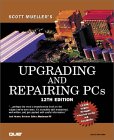 |
Upgrading and Repairing PCs (with CD-ROM)
Scott Mueller ISBN #0789723034, QUE The authoratative book on computer upgrading, maintenance, interchangeability, and repairs. It's the best reference out there. |

|
 |
Processor Magazine
Equipment and services, including storage, communications, and servers. Product announcements, marketplace information, and other articles designed to keep IT workers up to date with the latest news that matters most. Published weekly. |
Free Subscription
|


